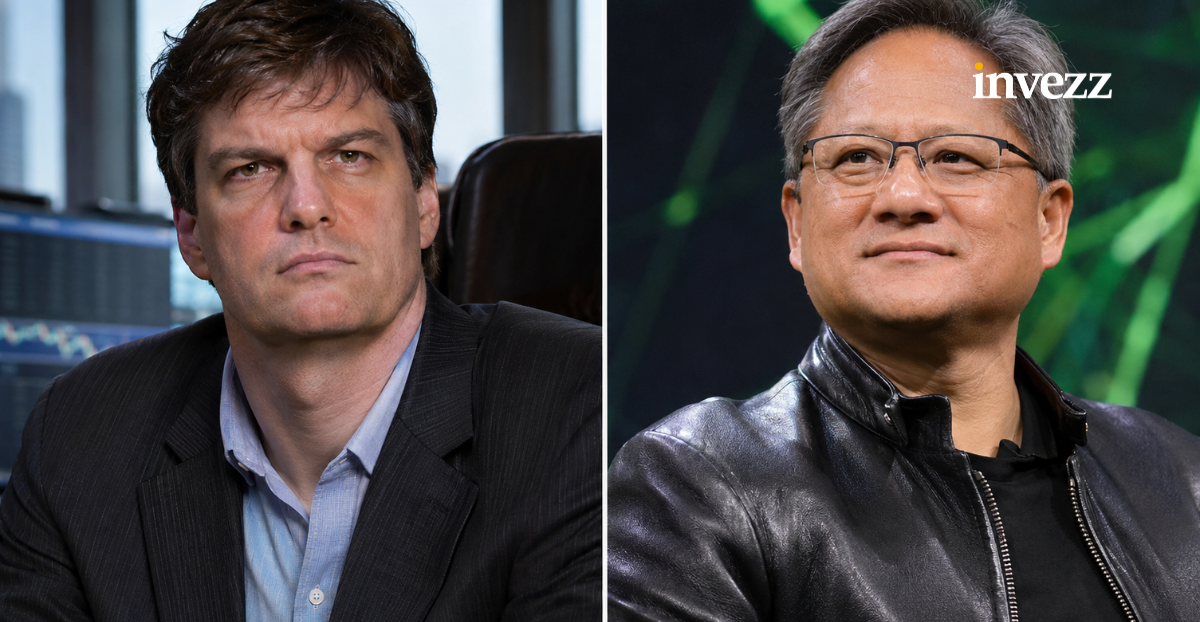
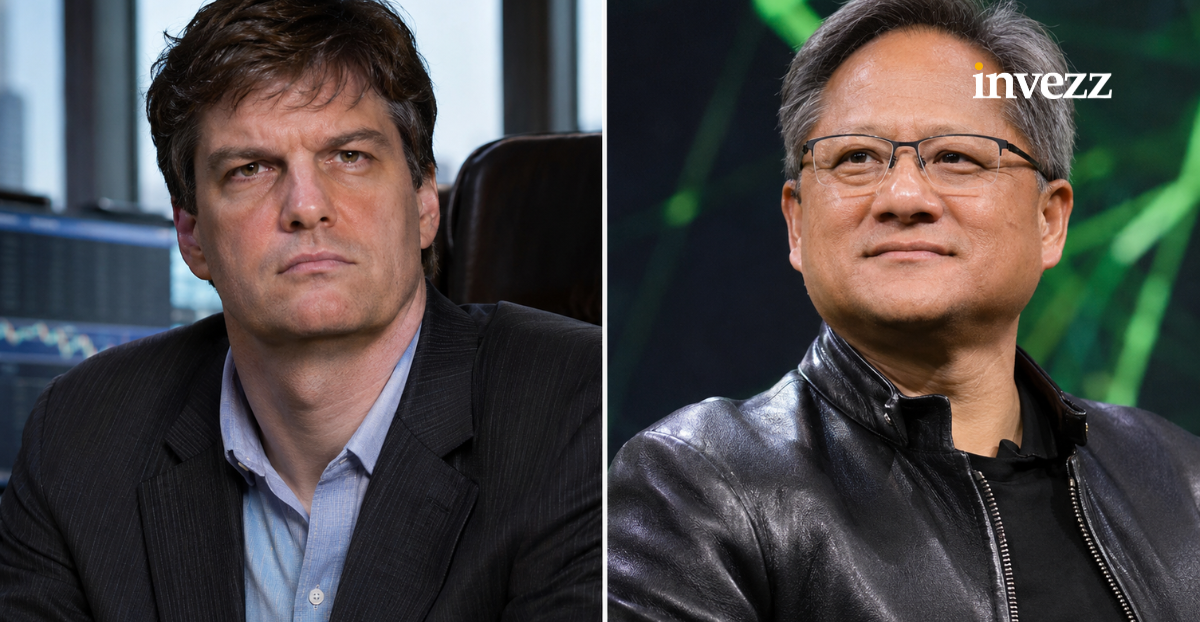
Michael Burry, the investor known for predicting the 2008 housing market collapse, has maintained his bearish outlook on Nvidia (NVDA) despite the return of Jensen Huang as chief executive, arguing that the leadership reversal does not resolve the underlying concerns surrounding the chipmaker.
In a Substack post on Tuesday, Burry said the market was not yet in the clear following Huang’s reinstatement, although he expected the company’s operations to return to normal.
Burry argued that Huang understood Nvidia’s internal operations better than its board, leaving competitors and customers facing uncertainty following the leadership changes.
However, he maintained that his short thesis on Nvidia remained intact, as it had never depended on Huang leaving the company.
Burry says Nvidia’s short thesis remains intact
Burry said his existing bearish thesis on Nvidia “is still valid, still has legs at full strength.”
He argued that Huang’s return would restore business as usual but leave the company in a precarious position.
Huang returned as Nvidia CEO on Monday after the board held discussions with US President Donald Trump, less than two weeks after his departure following allegations involving extramarital affairs and a woman alleged to be a Chinese spy.
Nvidia shares rallied 31% on Monday following the announcement, reaching $165.05.
However, the stock subsequently traded 7% lower.
Burry had also adjusted his Nvidia options positions before the rally.
According to his latest trading update, he sold 75% of his bearish put options on Nvidia, initially disposing of half on November 20 before selling another quarter following reports of a potential Securities and Exchange Commission investigation into the company’s accounting practices.
He also purchased a small position in long-dated, far out-of-the-money call options to hedge his remaining bearish exposure.
Burry described the combination as effectively creating a straddle rather than a straightforward directional bet.
Despite reducing his bearish options exposure, he remained critical of Nvidia’s corporate governance and dependence on Huang.
He also urged US authorities to continue investigating the company’s accounting and antitrust practices.
Michael Burry adds to JD.com, BYD and Tencent holdings
Separately, Burry disclosed that he had increased his exposure to three Chinese companies following the recent decline in Hong Kong stocks: JD.com, Tencent and BYD.
On JD.com, Burry highlighted its valuation discount relative to his estimated intrinsic value of approximately $45 per share.
He also noted that the company’s price-to-sales ratio had fallen to an all-time low of 0.17.
Burry also expressed interest in BYD, saying its shares had declined into the low HKD 60s since his previous commentary in March.
He lowered his preferred buying level to approximately HKD 58, describing the current price near HKD 60 as “close enough.”
However, he acknowledged several challenges facing the electric vehicle manufacturer, including higher capitalisation of research and development expenses, a roughly $7 billion reduction in supplier credit and increasing inventory days.
Overseas sales have also increased as a proportion of BYD’s vehicle sales, rising to 43% from 21% a year earlier.
On Tencent, Burry said the company’s aggressive artificial intelligence spending had reduced his estimate of its intrinsic value.
Nevertheless, he continued to view the stock as undervalued, describing Tencent as “the best business in China” and a “Fortress business.”
Burry adjusts other investments amid market volatility
Burry’s latest portfolio adjustments also included changes to several other positions.
He exited his entire put position in the VanEck Semiconductor ETF (SMH) and sold half of his Nasdaq 100 put options expiring in April 2027.
Elsewhere, he reduced his call options in Zoetis (NYSE: ZTS) by approximately one-third and increased his stake in MercadoLibre (NASDAQ: MELI) by 20%.
The adjustments indicate a shift in his exposure across several technology and international equities, even as he maintains his broader concerns about Nvidia’s business and governance.
AI disclosure: AI tools assisted with research and drafting of this piece. An Invezz editor reviewed the facts, sources and wording before publication. Any opinions or analysis are Invezz’s, not those of an automated system.
The post Michael Burry maintains Nvidia short thesis despite Jensen Huang’s return appeared first on Invezz