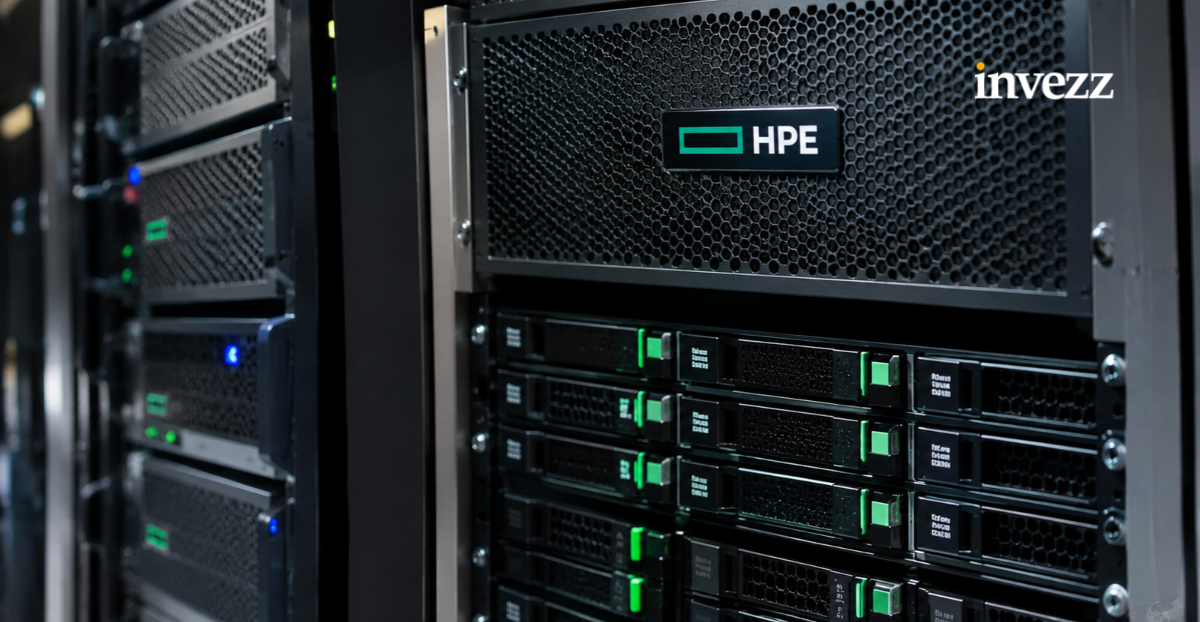
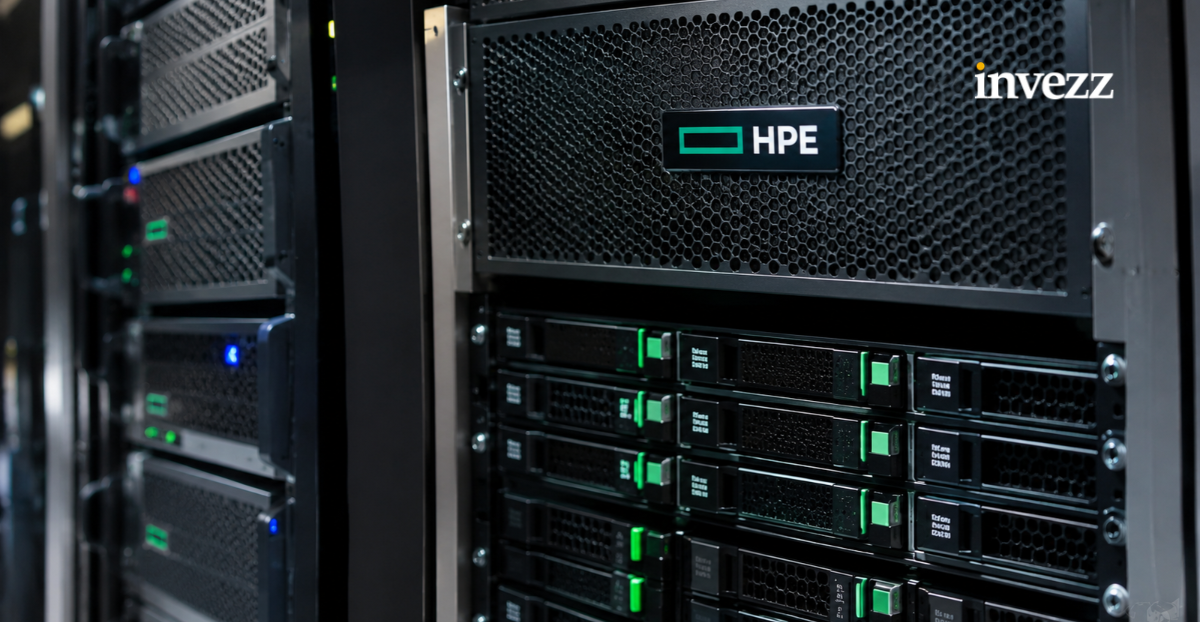
Hewlett Packard Enterprise (HPE) shares plunged 16% on Tuesday, putting the stock on track for its biggest single-day decline in more than 18 months.
Concerns about component shortages and pressure on profit margins overshadowed strong fourth-quarter results and an improved fiscal 2027 outlook.
HPE reported revenue of $14.5 billion for the fourth quarter, up 50% year over year.
Non-GAAP diluted earnings per share rose 131% to $1.43, while quarterly orders increased 88%, reflecting strong demand across its business.
However, investors focused on the potential impact of rising component costs and a greater contribution from lower-margin AI servers.
Component shortages expected to persist through 2028
Chief Executive Officer Antonio Neri warned during the earnings call that supply constraints could continue for nearly two more years.
“In fact, we continue to operate in a significantly supply-constrained environment. We expect supply of memory, NAND, and many other critical components to remain constrained to at least the second half of calendar 2028,” Neri said.
He added that HPE had considered demand, orders, backlog, and supply availability when preparing its fiscal 2027 guidance.
The company recorded $5.7 billion in AI orders during the fourth quarter, while its AI backlog reached a record $10.5 billion.
The figures point to strong demand for its AI infrastructure products, although the timing of deliveries and the cost of components remain concerns.
Analysts flag pressure on Cloud and AI margins
Several analysts highlighted the risk that higher AI server shipments and component costs could weigh on profitability.
Susquehanna described HPE’s fiscal 2027 guidance as mixed, with stronger revenue expectations partly offset by a weaker margin outlook.
The firm expects Cloud and AI operating margins to decline to 14% to 15% in fiscal 2027, from 15.1% in fiscal 2026, even as it forecasts revenue growth of about 32%.
Susquehanna analyst Mehdi Hosseini identified two factors behind the expected pressure: pricing adjustments lagging increases in component costs and a higher proportion of lower-margin AI server shipments in the second half of fiscal 2027.
Chief Financial Officer Marie Myers also warned that HPE’s gross margin rate would moderate as AI server volumes increase, including the ramp-up of its Helios systems.
Piper Sandler said the quarter was decent and noted the substantial improvement in HPE’s fiscal 2027 outlook.
However, it flagged the second-half weighting of sales, shipment timing related to Helios and Oracle, and the potential for margin compression.
Wells Fargo similarly described the results and outlook as mixed, highlighting the importance of gross margin trends and the expected increase in AI shipments during the second half.
Networking and cash generation offer potential support
Despite the margin concerns, analysts also identified potential growth drivers for HPE.
KeyBanc said strong order momentum should support server growth in fiscal 2027.
Higher networking shipments, contributions from Oracle and AMD-related Helios deployments, and improved cash generation could provide additional catalysts.
The firm nevertheless remained cautious about margin pressure from product mix and component costs.
It described the stock as inexpensive at less than 10 times its fiscal 2027 earnings per share estimate.
Truist also highlighted networking as a potential source of revenue and profit growth.
The firm expects HPE to generate more than $5.5 billion in free cash flow in fiscal 2027 and return about 75% of that amount to shareholders.
Truist added that HPE’s valuation remained attractive at approximately 8.6 times the midpoint of its fiscal 2027 adjusted earnings outlook.
AI disclosure: AI tools assisted with research and drafting of this piece. An Invezz editor reviewed the facts, sources and wording before publication. Any opinions or analysis are Invezz’s, not those of an automated system.
The post HPE stock falls 16% as AI server demand raises concerns over profit margins appeared first on Invezz