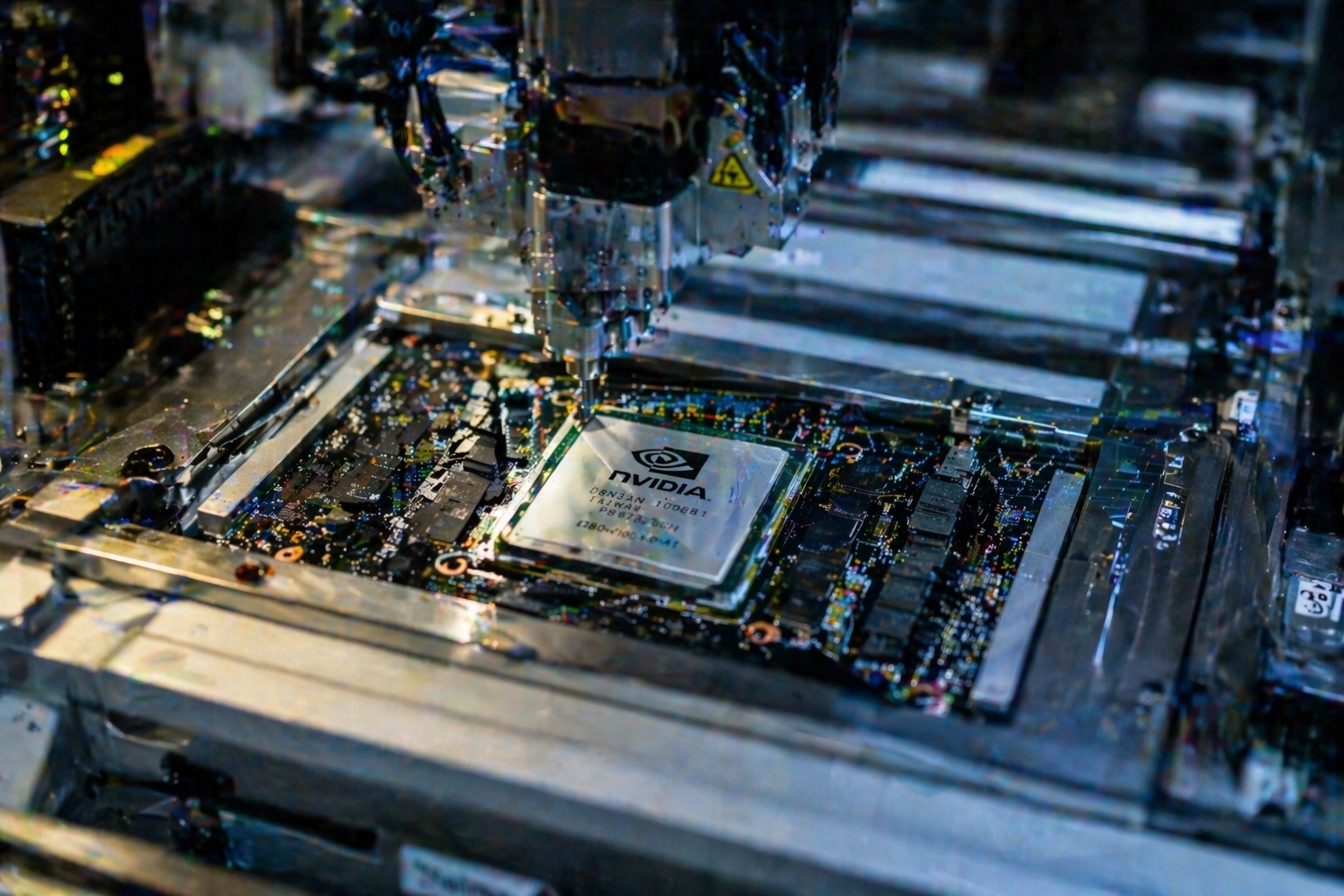
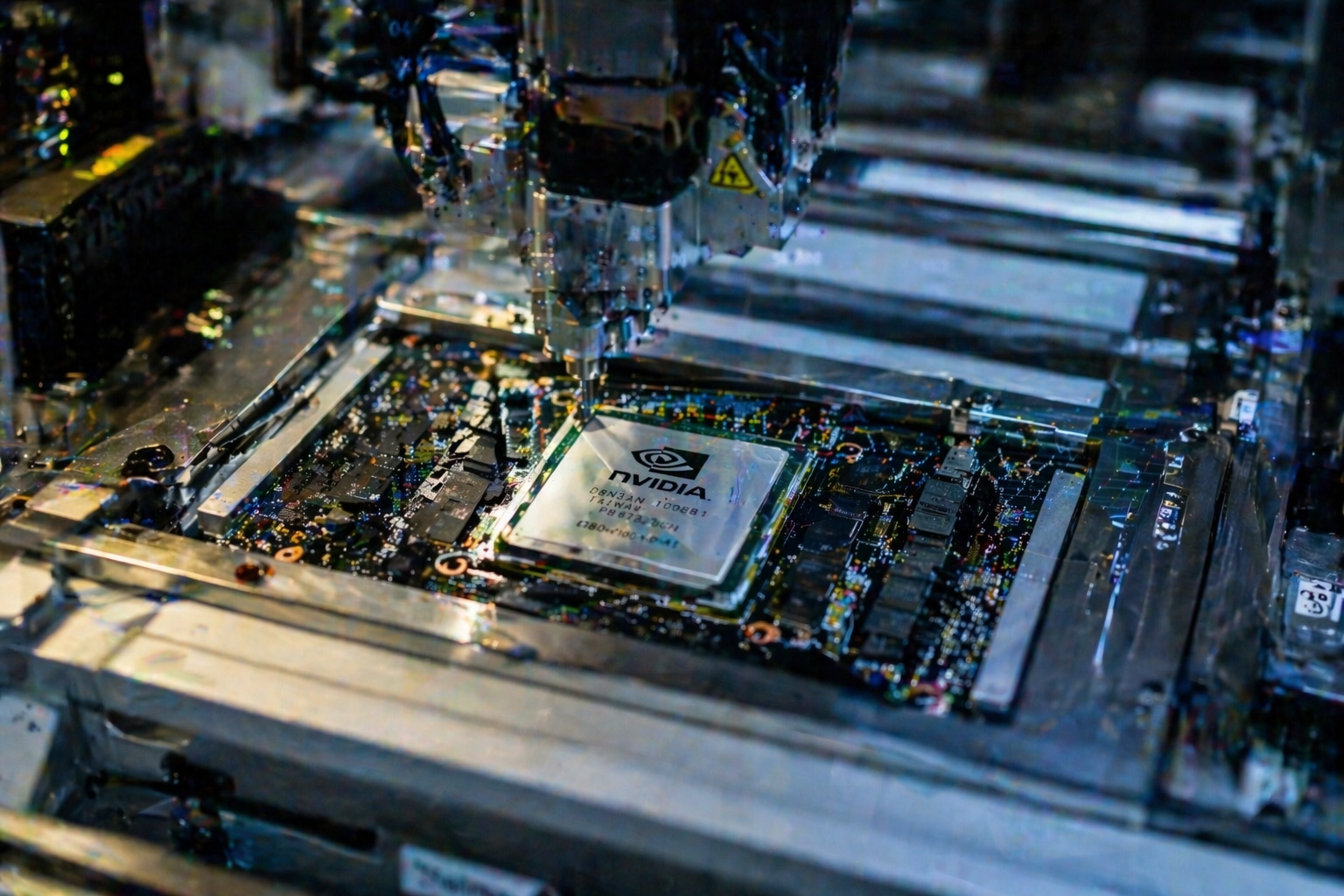
Shares of Nvidia edged lower on Tuesday, even as broader investor confidence in artificial intelligence demand remained intact, and the stock hovered near record levels.
The chipmaker’s shares fell about 1.2% in afternoon trading, despite a strong recent rally that has seen the stock gain roughly 15% over the past month. Nvidia is now approaching its record closing high of just over $207, reached in October last year.
The modest pullback comes amid rising competitive concerns, particularly following reports that Google is preparing to unveil a new generation of its in-house artificial intelligence chips.
Google’s TPU push raises competitive questions
Investor attention has turned toward Google’s tensor processing units (TPUs), which are expected to be showcased at the company’s Cloud Next conference this week, according to Bloomberg.
TPUs represent one of the most significant competitive threats to Nvidia’s dominance in AI chips to date. However, Nvidia executives and analysts have largely downplayed the risks, pointing instead to the company’s technological lead and entrenched ecosystem.
“With significant barriers to entry created by its CUDA software stack, we see limited competitive risks and expect Nvidia to continue to dominate one of the fastest-growing workloads in cloud and enterprise,” KeyBanc analyst John Vinh wrote in a research note on Monday.
Vinh reiterated an Overweight rating on Nvidia, with a price target of $275, underscoring continued confidence in the company’s long-term positioning.
Analysts suggest that upcoming earnings from major technology companies could provide further clarity, particularly around whether leading AI models continue to rely on Nvidia’s graphics processing units (GPUs) rather than shifting toward alternative architectures like TPUs.
AI demand and ecosystem strength support outlook
Despite the competitive noise, analysts remain broadly optimistic about Nvidia’s prospects, citing strong demand for AI infrastructure across cloud and enterprise environments.
“We believe many investors underappreciate that GPUs often represent the lowest risk hardware investment for cloud vendors – especially for any instance that will ultimately serve external customer workloads,” wrote UBS analyst Timothy Arcuri in a research note.
“Nvidia’s CUDA ecosystem is not a strong moat in every case, but Nvidia’s ability to internally model, simulate, and benchmark alternative architectures is a factor that we feel many investors underappreciate”, Arcuri added.
Nvidia’s CUDA software platform continues to serve as a key differentiator, enabling developers and enterprises to build and deploy AI applications efficiently, reinforcing customer stickiness even as rivals invest heavily in alternative solutions.
Market data also reflects sustained bullish sentiment. According to TipRanks, the average 12-month price target from 43 analysts stands at $273.57, implying a roughly 37% upside from recent levels.
Vera Rubin platform fuels long-term optimism
Looking ahead, Nvidia’s next-generation hardware roadmap remains a central pillar of its growth story.
Analysts at Bernstein maintained a Buy rating on the stock with a $300 price target, highlighting the upcoming Vera Rubin platform as a major catalyst.
Analyst David Dai described the platform as “a monster,” projecting that it will deliver five times more inference performance and 3.5 times more training performance compared with current models.
Importantly, these gains are expected to come with only 1.6 times more transistors, pointing to significant improvements in design efficiency.
The Vera Rubin platform is anticipated to begin shipping in the second half of 2026, potentially reinforcing Nvidia’s leadership in high-performance AI computing.
The post Why is Nvidia stock slipping despite strong AI demand? appeared first on Invezz