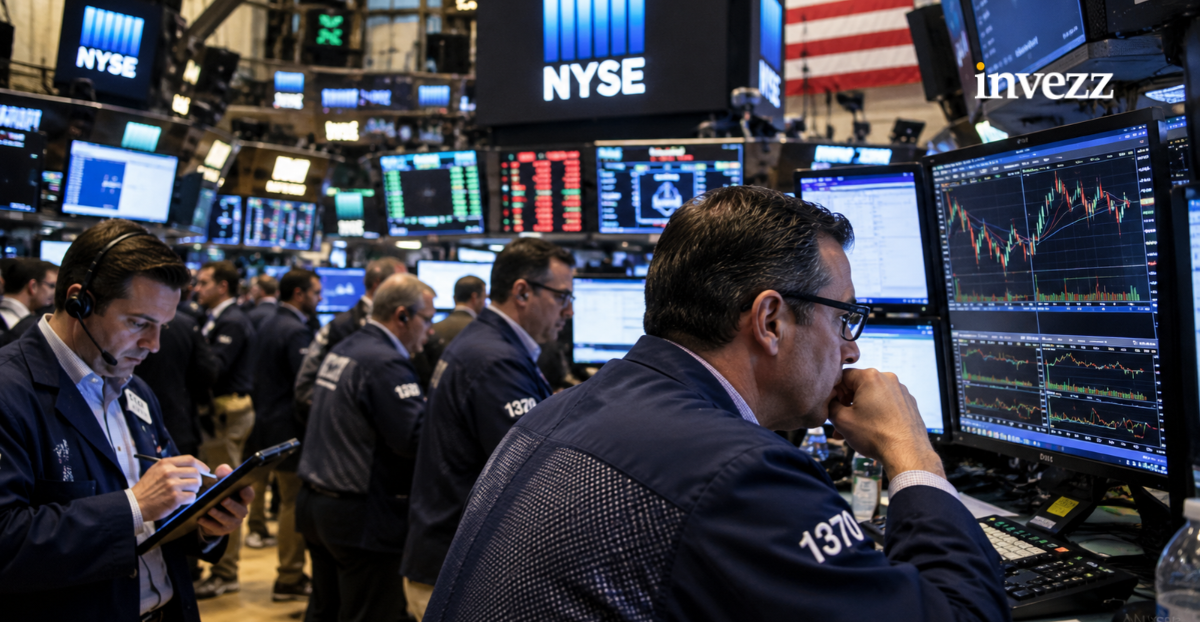
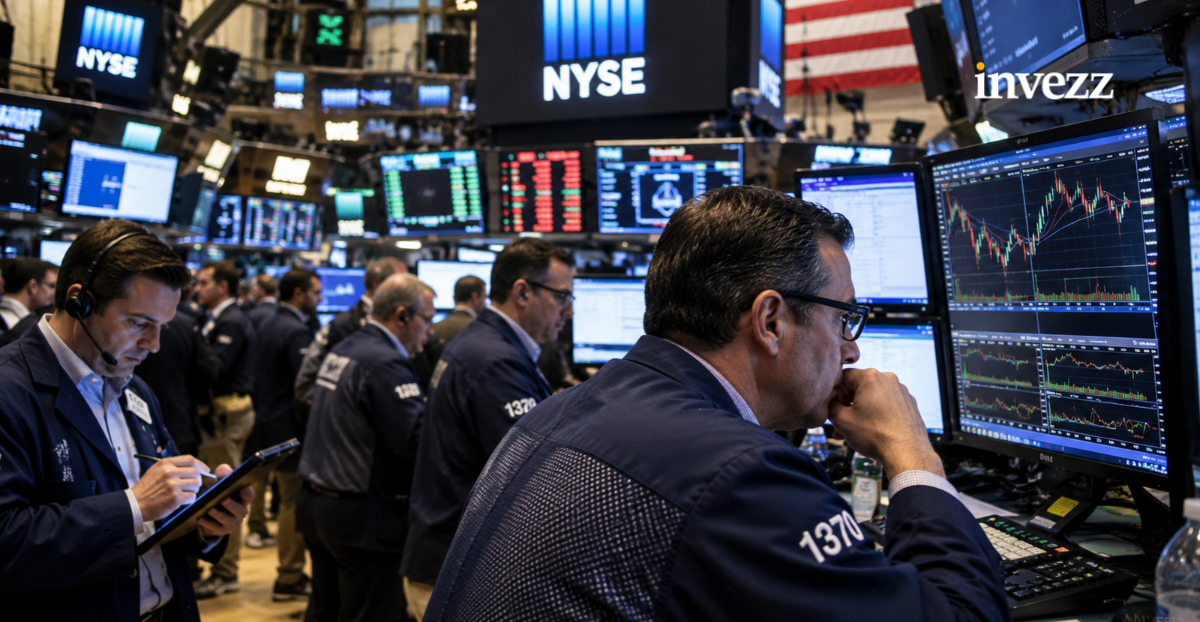
US stocks suffered another sharp sell-off on Friday as doubts about artificial intelligence spending dragged the S&P 500 into correction territory, sending investors towards more defensive parts of the market.
The benchmark fell 3.7% to 6,910.39, taking its weekly loss to 8.61%. The Nasdaq Composite declined about 10% over the five sessions, despite Nvidia’s strong earnings and Anthropic’s record initial public offering.
The retreat has highlighted the danger of relying on a handful of highly valued technology companies to carry the wider market.
Yet some exchange-traded funds held up considerably better.
1. XLP: Essential spending provides a defensive cushion
XLP, which tracks consumer staples companies in the S&P 500, lost approximately 2.05% during the week, compared with the benchmark’s 8.61% decline.
It finished Friday at $90.46 and gained about 0.7% during the final session, when most stocks fell.
The fund holds businesses selling groceries, drinks and household products, including Walmart, Costco, Procter & Gamble and Coca-Cola.
Such companies can benefit when investors favour businesses whose sales are less dependent on economic optimism or expensive technology projects.
“Money is leaving tech, not the market,” technology analyst Luke Lango told Kiplinger on Friday, arguing for mature companies with predictable earnings.
XLP charges an annual expense ratio of 0.08%, making it a relatively inexpensive way to gain sector exposure.
Its recent resilience also presents a risk, as investors seeking safety may bid up valuations even if earnings growth remains modest.
2. XLV: Healthcare offers a different earnings story
XLV fell roughly 6.15% last week, outperforming the S&P 500 by around 2.46 percentage points. Its Friday closing price was $177.24, with an annual expense ratio of 0.08%.
The fund owns pharmaceutical manufacturers, healthcare providers and medical equipment companies.
Its largest holdings include Eli Lilly, Johnson & Johnson, AbbVie and Merck, giving investors exposure to drug demand and medical innovation rather than semiconductor spending.
Ageing populations, treatments for chronic conditions and the growth of obesity medicines could support revenues even if AI infrastructure investment slows.
“The biggest opportunity may be beyond the stocks that fell the most,” Saxo chief investment strategist Charu Chanana wrote on Monday, urging investors to look beyond indiscriminate dip-buying.
Healthcare has its own vulnerabilities. Eli Lilly accounts for nearly 17% of XLV, creating concentration risk, while drug-pricing rules, reimbursement pressures and political decisions can unsettle earnings.
3. USMV: Lower volatility without abandoning equities
USMV uses a rules-based strategy designed to reduce portfolio volatility rather than concentrate on one defensive sector. It declined about 5.67% last week to $98.20, outperforming the S&P 500 by nearly three percentage points.
The fund held approximately 174 stocks and had a three-year beta of 0.46, suggesting lower historical sensitivity to broad market movements. Its annual expense ratio is 0.15%.
However, information technology still represented roughly 29.6% of the portfolio as of Thursday. USMV therefore remains exposed to some of the same pressures affecting the AI trade.
Charles Schwab’s Kevin Gordon warned on Friday that stocks face a “rock-and-a-hard-place backdrop”, with sticky inflation constraining interest-rate policy while slower AI spending threatens growth.
A low-volatility strategy can still lose money and may lag sharply if beaten-down technology shares rebound.
AI disclosure: AI tools assisted with research and drafting of this piece. An Invezz editor reviewed the facts, sources and wording before publication. Any opinions or analysis are Invezz’s, not those of an automated system.
The post 3 ETFs that could outperform the S&P 500 if the AI crash continues appeared first on Invezz