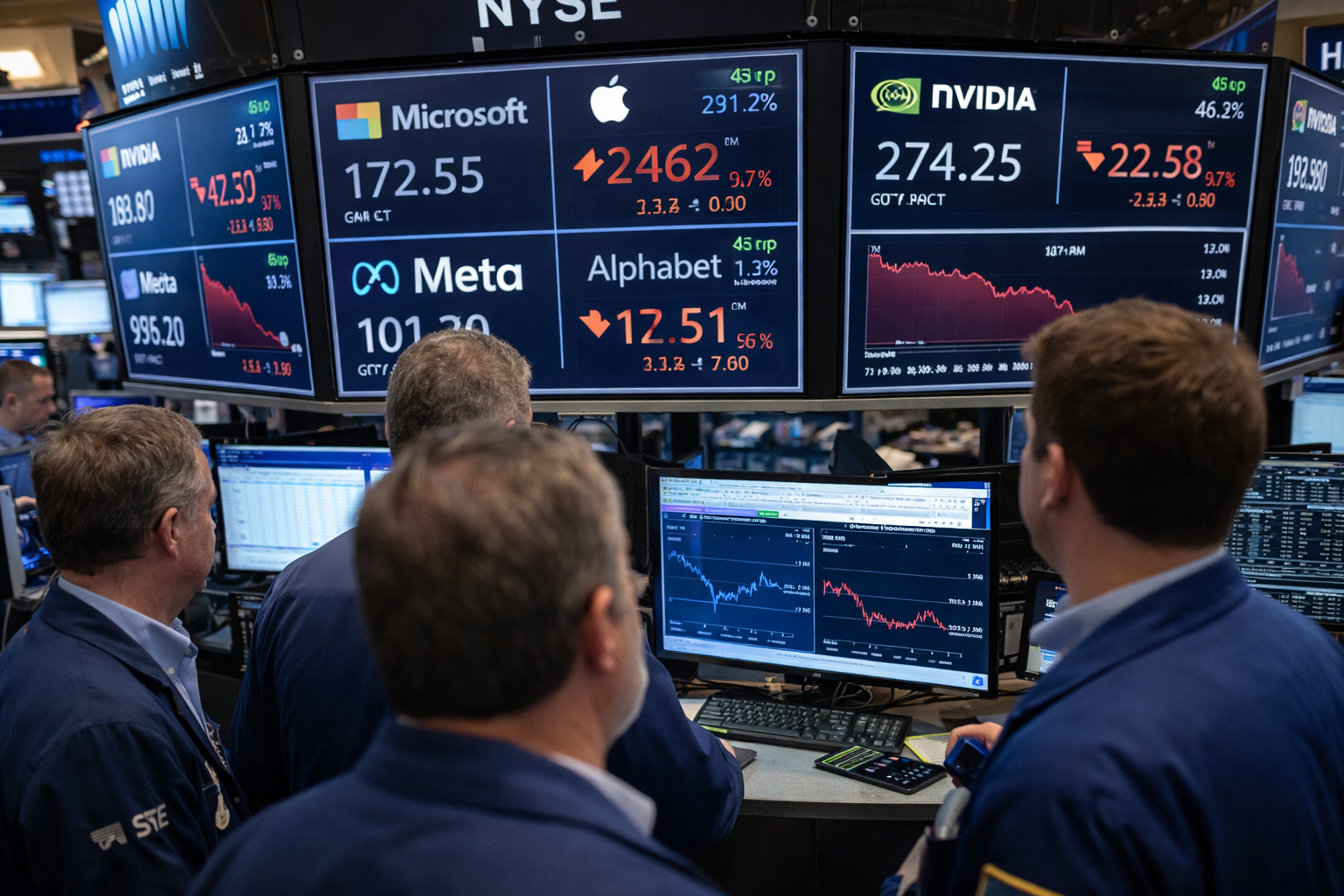
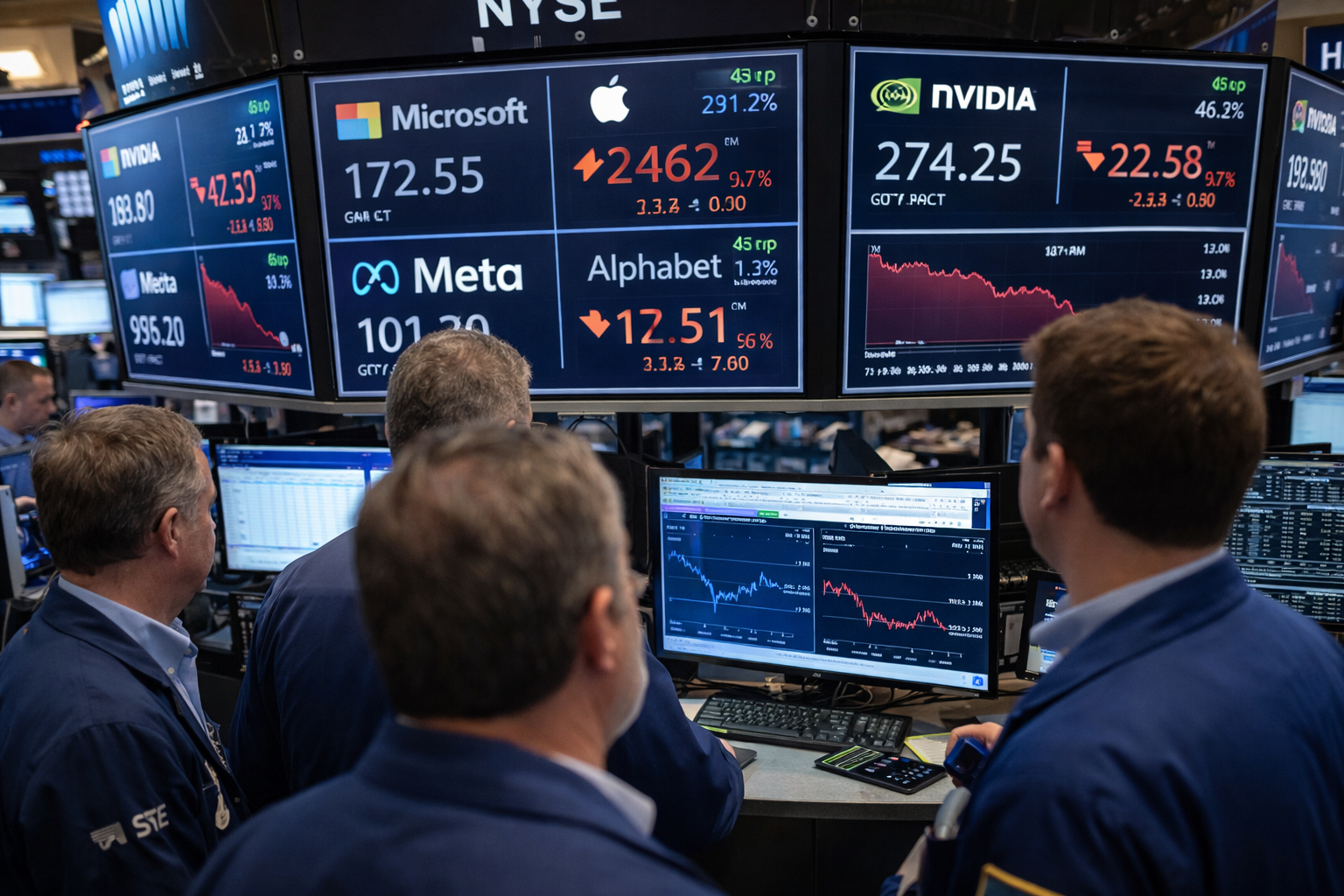
US megacap technology stocks, long the driving force behind a bull run spanning more than three years, are undergoing a sharp valuation reset as a mix of geopolitical tensions, rising yields, and questions around artificial intelligence spending weigh on sentiment.
The pullback has intensified in recent weeks, with the sector already under pressure before the escalation of the Iran conflict.
Since the war began, losses have widened, contributing to what is shaping up to be the weakest quarter for US equities in about four years.
The benchmark S&P 500 is set to end the quarter in the red, with technology stocks accounting for a significant portion of the decline.
The correction has been particularly pronounced in high-growth names, where elevated valuations had left stocks more vulnerable to shifts in investor sentiment.
On Tuesday, the Technology Select Sector SPDR Fund (XLK) edged up 1.7%, while Nvidia gained 2.3% and Microsoft rose 2.4% after reports that President Donald Trump signalled a willingness to end military hostilities in the Middle East even if the Strait of Hormuz remains largely shut, but the development offers only limited relief to markets.
Geopolitics and AI concerns hit megacaps
Technology stocks have been retreating since peaking in October, as investors reassess whether heavy spending on AI infrastructure will translate into sustained returns.
The escalation of the Middle East conflict has further dampened risk appetite, accelerating outflows from equities.
The Nasdaq Composite has fallen more than 10% from its recent highs, entering technical correction territory for the first time since April 2025, when tariff-related tensions rattled markets.
Among megacap names, losses have been steep.
Meta Platforms has declined about 18%, while Alphabet is down roughly 11%, with both stocks also facing pressure from adverse legal developments.
Nvidia and Microsoft have each dropped around 10%, while Amazon has been relatively resilient, slipping about 4%.
The broader S&P 500 technology sector has fallen nearly 8% since the conflict began, in line with the overall index.
Market dynamics amplify selling pressure
Analysts say multiple factors are converging to create a challenging environment for technology stocks.
Rising Treasury yields, driven by inflation concerns linked to higher energy prices, have weighed on valuations, particularly for growth stocks whose earnings are expected further into the future.
At the same time, investors are rotating out of crowded trades.
“Because of the dominance and the success of the megacaps over the past few years, I think they became the first and easiest source of cash for investors,” said Matt Orton, chief market strategist at Raymond James Investment Management, in a Reuters report.
He added that a combination of factors has created a difficult backdrop.
“You just have this perfect storm that is providing headwinds for megacap tech and tech, broadly speaking.”
Orton also warned that broader market stability may depend on the sector’s recovery.
“Until these big tech names are able to find some sort of stability in the market, it becomes almost impossible for the broader market to also find its footing,” he said.
Valuations compress to more attractive levels
Despite the selloff, analysts note that valuations have become significantly more attractive.
The technology sector’s forward price-to-earnings ratio has dropped from 32 in late October to around 20, bringing it close to the broader market’s multiple of 19.3.
In some cases, leading stocks are trading at levels not seen in years.
Nvidia is now valued at just over 19 times forward earnings, its lowest since 2019, while Meta is trading at around 17 times, a three-year low.
This compression has led some strategists to turn more constructive on the sector.
“The risk-reward is improving,” said Chris Galipeau, senior market strategist at Franklin Templeton in the Reuters report.
“As stock prices come down, the risk in owning them is also coming down.”
Earnings outlook offers support
Fundamentals for the sector remain strong, even as sentiment weakens.
According to LSEG IBES data, technology companies are expected to deliver earnings growth of 43% in 2026, significantly outpacing the broader S&P 500’s projected growth of 18.8%.
Some investors view the current downturn as a potential entry point.
Julian Emanuel, chief equity and quantitative strategist at Evercore ISI, said he remains optimistic about the sector’s long-term trajectory.
“We are buyers of Big Tech,” Emanuel said in a Bloomberg report, pointing to the continued acceleration of the AI revolution and more compelling valuations.
He added that several technology stocks are now trading below their pandemic-era valuation troughs.
While near-term volatility is likely to persist, particularly amid geopolitical uncertainty, the combination of lower valuations and strong earnings potential is keeping investors engaged with the sector, even as markets search for a clearer direction.
The post As US tech stocks fall on AI and war fears, are valuations attractive now? appeared first on Invezz