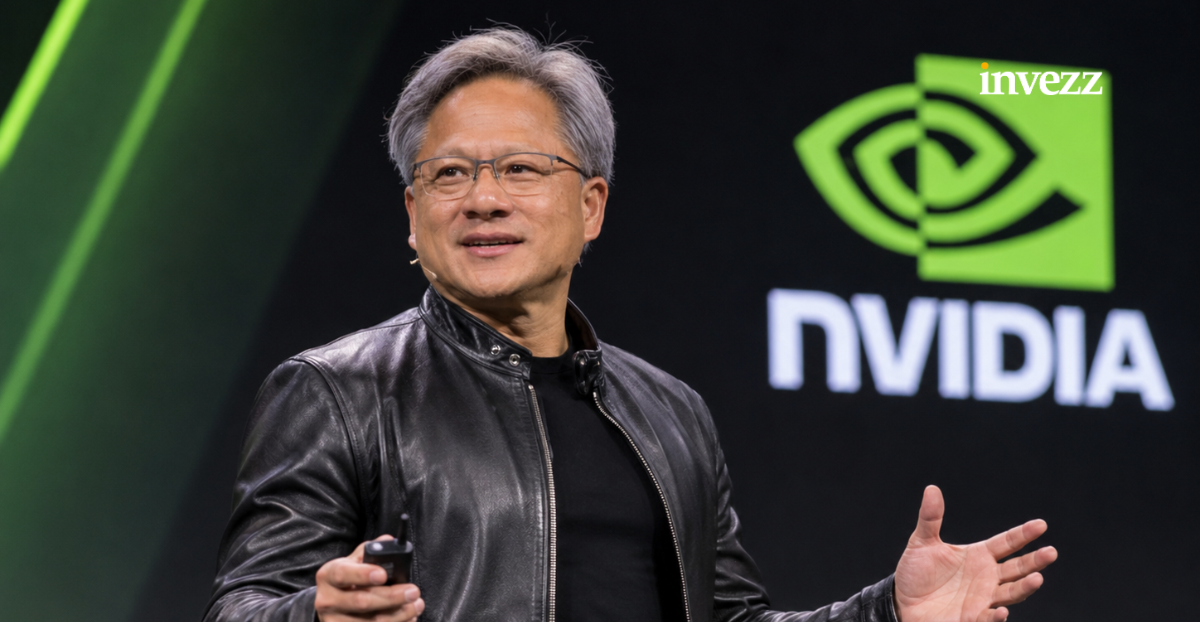
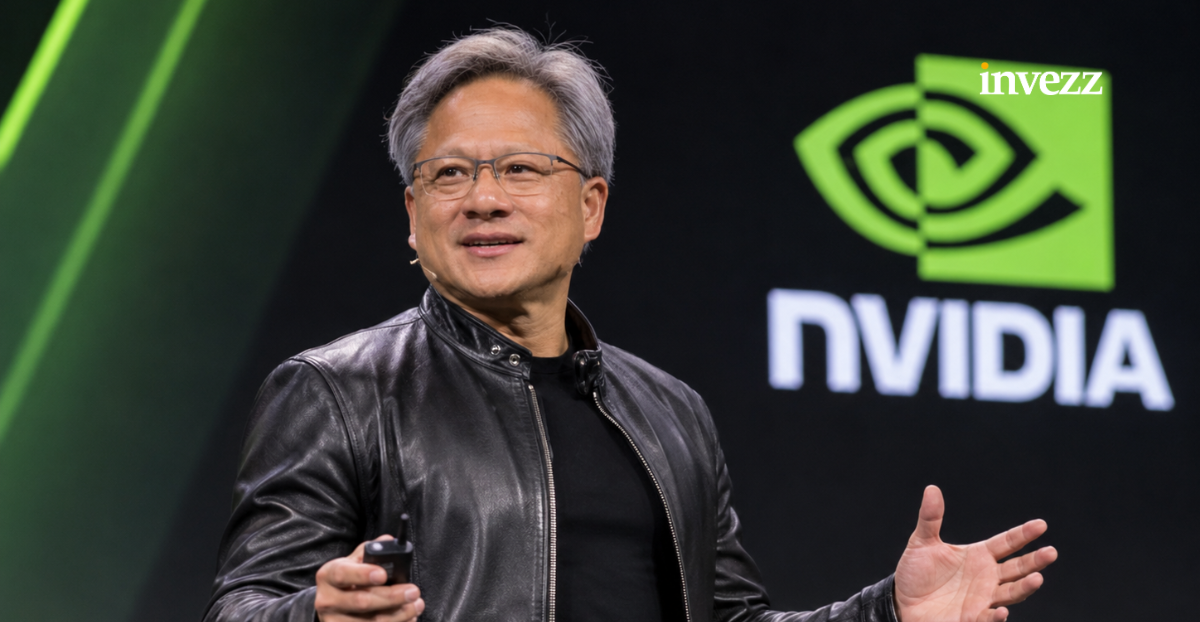
Nvidia did not just become the epicentre of the global AI technology boom under Jensen Huang’s leadership.
It also helped keep the industry’s investment cycle moving by pouring money into companies and backing projects considered crucial to the expansion of AI.
Stamped with Huang’s dynamism and credibility, and fuelled by the company’s enormous cash reserves, these deals earned Nvidia the moniker of the ‘central bank of AI’.
Now, with Huang’s future at the company hanging in the balance following reports that the board is considering his ouster amid revelations about a second relationship, this time involving a company executive, questions are emerging over whether the flow of capital from Nvidia could slow.
Nvidia stock has slipped about 8% during premarket trading on Thursday.
Nvidia’s growing role in financing the AI boom and the ‘Nvidia put’
Last year, Nvidia purchased $5 billion worth of Intel shares.
The chipmaker plans to invest about $10 billion in Anthropic immediately after its IPO, according to the company’s investor prospectus.
It has also invested $30 billion in OpenAI and agreed to guarantee up to $105 billion in leases for OpenAI’s data centre projects in Ohio.
Nvidia has invested $2 billion each in neocloud operators CoreWeave and Nebius, as well as in photonics companies Lumentum and Coherent.
In August, it partnered with six major financial institutions, including Apollo, BlackRock, Blackstone, Brookfield and Goldman Sachs, to launch compute financing platforms aimed at raising more than $500 billion in third-party capital for AI infrastructure.
Nvidia CEO Jensen Huang said on X that the company had the option to backstop up to $125 billion, or 25% of the potential deals.
These investments and financing arrangements have also drawn criticism from detractors, who argue that they resemble circular financing.
Under this model, a company provides funding to customers, who then use some of that money to purchase its products.
For example, besides investing $2 billion in CoreWeave this year, Nvidia holds a stake of more than 12% in the neocloud operator.
CoreWeave spends heavily on hundreds of thousands of Nvidia graphics processing units (GPUs), which it rents out to customers such as Microsoft and OpenAI.
Huang has consistently pushed back against the circular financing argument.
His justification has been that building and deploying AI infrastructure is capital-intensive, while many startups and smaller companies lack the financial profiles needed to borrow the money required to secure computing capacity.
“They’re not investment grade. They don’t have the track record, the capital track record, the financial track record, to be able to capture or secure capital at a low cost. And this is where Nvidia could be helpful,” Huang said in an interview with Jim Cramer earlier this year.
The potential leadership upheaval is then already weighing on parts of the AI ecosystem that have benefitted from close financial and commercial relationships with Nvidia.
CoreWeave shares also fell around 7% in premarket trading on Thursday, in tandem with the decline in NVDA.
The losses come just a day after CoreWeave shares had closed 25% higher following strong earnings, helping lift sentiment across the AI trade.
“Nvidia has come to act as a kind of “central bank of artificial intelligence”: it sells the chips, invests in companies using them and provides financial backing for projects that expand demand. Over the past three years, that financial support for customers has reached approximately $300 billion, alongside investments in start-ups. That figure illustrates the scale of its role in the ecosystem,” Manuel Pinto, head of analysis at XTB Spain, told Invezz.
“This has encouraged what we might call an “Nvidia put”: the expectation that the company will use its balance sheet and negotiating power to support strategic projects when financing becomes scarce. This is not a guarantee of share prices, but confidence that certain projects will find backing,” he said.
Could Nvidia’s financial backing of other projects weaken without Huang?
The controversy and now a possible ouster of Huang then threaten to cast a shadow over the additional support Nvidia has provided to the ecosystem financing the AI boom.
An Nvidia without Huang at the helm could become more cautious about taking on new financial exposure.
“These arrangements are underpinned by Nvidia’s balance sheet and technological position, but Huang’s personal credibility has also been instrumental in bringing together some of the industry’s most ambitious partnerships,” Bruno Schneller, managing partner at Erlen Capital Management, told Invezz.
He said existing contractual obligations would not disappear if Huang left, but the bigger question was whether a new CEO would have the same appetite for equity investments, financing guarantees and strategic commitments.
“Counterparties may also demand greater transparency, tighter terms and more formal assurances under different leadership. A more conservative approach to capital allocation could be positive for Nvidia’s balance sheet but negative for parts of the AI ecosystem that have become dependent on its financial support,” he said.
Pinto shared a similar assessment.
“If Nvidia’s backing becomes less predictable, investors and creditors could demand greater compensation for taking on risk. That could translate into more expensive financing, slower projects and greater pressure on leveraged operators,” he said.
The analysts pointed out that large technology companies with strong balance sheets would be better placed to absorb that adjustment.
Structural drivers of AI infrastructure demand — hyperscaler capital expenditure, model training, inference and accelerated computing — would remain intact.
What could it mean for investors and the AI trade?
The controversy surrounding Huang comes at a time when the AI trade is already facing questions about infrastructure spending, financing requirements and the path to profitability.
“Greater discipline would be healthy over the longer term, but the transition could intensify strains across the sector,” said Pinto.
According to Pinto, Nvidia accounts for approximately 7% of the S&P 500’s market capitalisation, but estimates put its contribution at around 25% of the index’s variance.
“Its influence on market risk significantly exceeds its index weighting. A reduced willingness to support certain projects could affect both their financing and investor confidence,” he said.
Schneller said investors need to understand how much of the current pace of investment is supported by sustainable end-customer demand and how much depends on financing provided, directly or indirectly, by the companies selling the infrastructure.
“The practical test will be whether existing projects continue to execute on schedule and whether new financing and capacity agreements can be concluded on comparable terms under different leadership. In that sense, Huang’s potential departure could become a stress test not just for Nvidia’s leadership, but for the financing model underpinning the entire AI investment cycle,” he said.
David Morrison, senior market analyst at Trade Nation, told Invezz that investors should also consider Nvidia’s importance to a wide range of portfolios, including those managed by professional investment groups, hedge funds and pension funds, as well as retail investors.
A significant portion of this exposure, he added, has been built using leverage.
“That increases the risk of a cascade of sellers on the back of margin calls, and suddenly Nvidia goes from a $5 trillion valuation to a, say, $1.5 trillion one. How would that affect its ability to do mega-deals in the future? I’d suggest badly. But of course, that’s just speculation.”
AI disclosure: AI tools assisted with research and drafting of this piece. An Invezz editor reviewed the facts, sources and wording before publication. Any opinions or analysis are Invezz’s, not those of an automated system.
The post Jensen Huang could be fired: what does it mean for Nvidia’s role as AI’s financier appeared first on Invezz