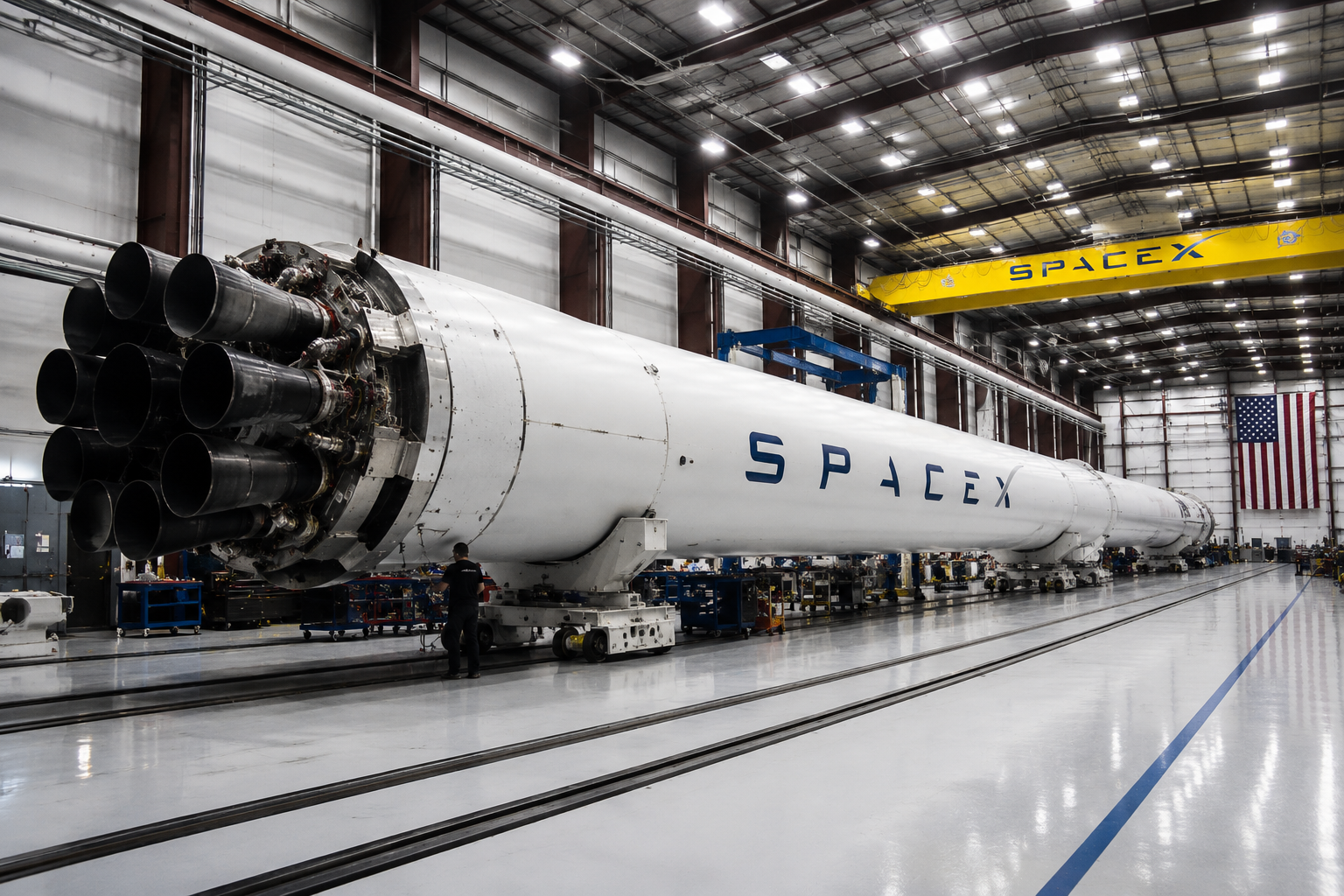

SpaceX stock SPCX gained 2% on Tuesday as Bernstein SocGen Group raised its price target on the company, citing expanding artificial intelligence infrastructure plans and the potential for orbital data centres to drive future growth.
Bernstein increased its price target to $268 from $248 and maintained an Outperform rating.
The new target implies an 82% upside from current levels, while SpaceX shares have gained nearly 10% from their initial public offering price.
The research firm said its revised outlook primarily reflects plans to expand terrestrial computing capacity, alongside growth in enterprise and government connectivity.
Bernstein’s valuation case does not assume a merger with Tesla or that SpaceX achieves its full revenue ambitions.
Bernstein raises SpaceX revenue and computing forecasts
Bernstein now forecasts $424 billion in full-year 2028 revenue for SpaceX.
The estimate remains below the company’s ambition to reach an annualised revenue pace of $500 billion to $1 trillion by the end of 2027.
The firm said investors did not need SpaceX to meet its entire revenue target for the investment case to remain attractive.
Bernstein also raised its forecast for terrestrial computing capacity to 13 gigawatts by the end of 2027, five gigawatts above its previous estimate.
Capacity is projected to reach 20 gigawatts in 2028, compared with 1.7 gigawatts reported at the end of September.
Elon Musk has said he expects SpaceX to add 10 gigawatts of computing capacity in 2027, in addition to the 2.5 gigawatts to 3 gigawatts expected to come online by the end of 2026.
Bernstein said pricing for computing capacity could also provide further upside.
Although it increased its assumptions, the firm kept them below the company’s expectations.
Orbital data centres and Starship reusability in focus
SpaceX is planning its first orbital data-centre launches for late 2027, with operations expected to begin in mid-2028.
Bernstein said the success of orbital computing infrastructure would depend partly on Starship’s ability to become reusable.
The company plans to attempt to catch both the booster and spacecraft during Flight 15, which is expected within weeks.
The performance of Starship’s heat shield during Flight 14 could help pave the way for the first reuse of the spacecraft on Flight 16, according to Bernstein.
Meanwhile, SpaceX continues to expand its Starlink network.
The company launched 27 Starlink satellites from California on Tuesday aboard a Falcon 9 rocket as it gradually shifts its focus towards the larger Starship programme.
BofA adds SpaceX to top investment ideas list
SpaceX also received attention from Bank of America, which added the company to its US 1 List of preferred investment ideas. Fox Corp. was also added, while RenaissanceRe was removed.
BofA highlighted SpaceX’s reported plans to secure access to more than 80,000 US cellular sites as it considers expanding beyond satellite internet into nationwide mobile services.
The brokerage estimates that radio access network equipment could cost around $75,000 per site, implying total spending of approximately $6 billion.
Nokia and Ericsson could benefit from the potential equipment demand, according to BofA.
Bernstein’s valuation model does not include a potential Tesla merger or a reported telecom tower deal.
Musk has cautioned that a merger with Tesla is not certain, and independent board committees have yet to agree on terms.
The post SpaceX stock rises, why analysts see more upside for the stock appeared first on Invezz